Two Years of Weaponized Plastic
17 Aug 2026robots Back in 2015, we started a “3-lb plastic fighting robot” league. The idea was pretty simple: 3d printers were decent, and 3d printed parts generally didn’t destroy the expensive electronics and batteries in the robots.
It eventually took on the name “Weaponized Plastic Fighting League” and I bought yet another domain name - weaponizedplastic.com.
I never got around to actually building a robot back then because you generally don’t have much free time as the CTO of a startup that has just closed a Series-A funding round. But I did end up doing a bunch of video work to capture the matches, and edited some decent videos. We also live streamed one or two of the events.
Ten years later, in March 2025, myself and a friend from Fetch decided to reboot things, I built an arena and we’ve now had two annual events on the farm in New Hampshire. Here’s the highlight reel from 2025’s event (the 2026 event video is coming soon):
My Robot: Drumnado
In addition to building a hammer robot and a number of bar-spinners for my nephews, I also built an entry for myself - a drum spinner:
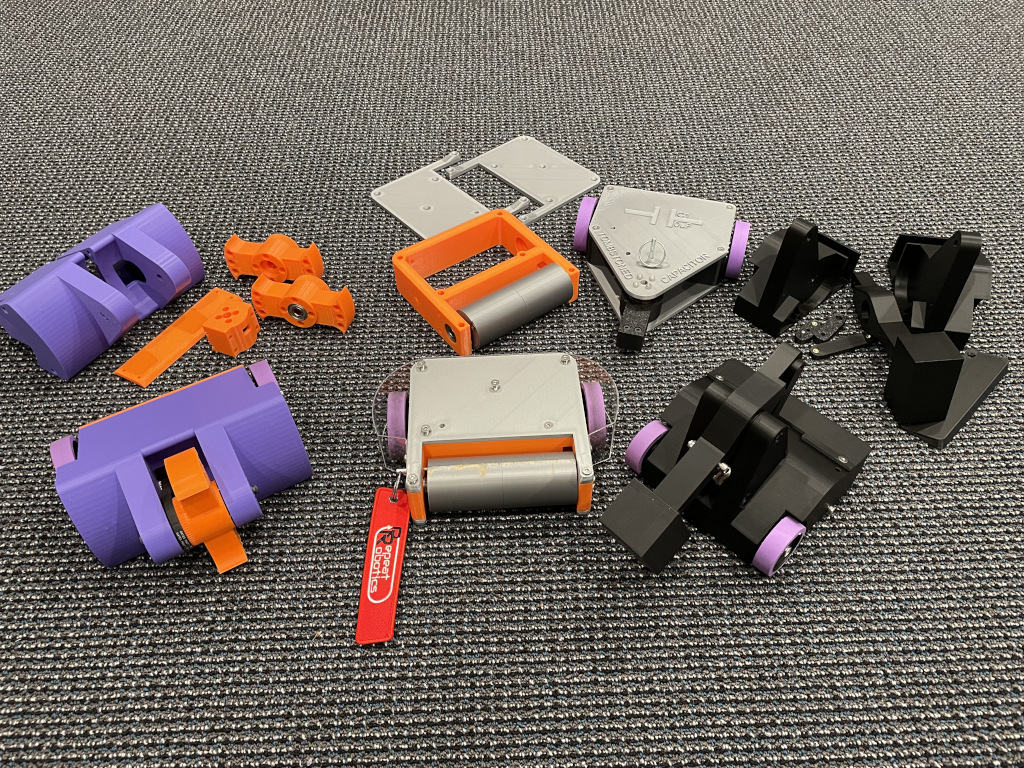
Initially I forgot to come up with a name for the robot - and used the same “Issy” moniker that I’ve used for ages with my mostly unnamed robots. During the 2026 event, I had a wheel get stuck, causing me to have to drive the robot on one wheel with the assistance of the gyro force of the drum to lift the other wheel off the ground. I finally had a name for the robot: Drumnado.
The design is fairly simple - differential drive using motors from Repeat Robotics. A super cheap 27mm diameter brushless motor is used for the drum motor. The other end of the drum is held in place with a bearing and shoulder screw. Controls were typical RC.
Drumnado: 2025 Results and Learnings
In 2025, the robot was quite successful, finishing 2nd. I had two major failure cases.
First, the robot occasionally would get stuck on debris in the arena. This was fixed for 2026 by going from wheels that were 2-3/8” to 2-7/8”, adding a full quarter inch of clearance whether the robot is inverted or not.
The second issue was that the drum assembly occasionally failed. The bearing was heating up and coming loose from the robot body, this would then allow the drum to move side to side, often getting stuck against the robot body. Numerous upgrades were deployed in 2026 to fix this issue.
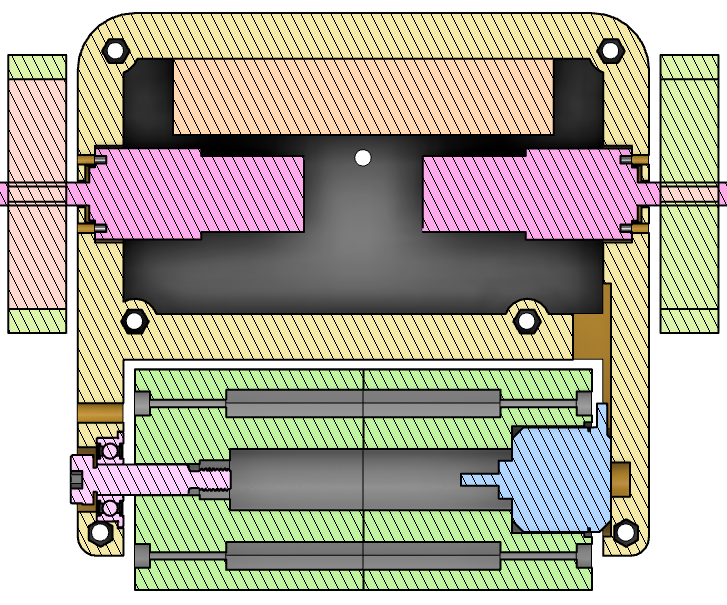
First, I bought a better bearing. Those super cheap, no-name bearings end up generating a lot of heat. My bearing budget went from 5 bearings for $8 all the way up to $14 for a single bearing. The bearing was also changed to a flanged style. This effectively doubled the surface area involved in keeping the bearing from moving sideways. I also fixed a number of tolerance issues in the original design so that the drum could not back itself onto the motor.
The cross section below shows the updated bearing setup for 2026. The spacers between the bearing and the drum are not shown modeled in the CAD.
I had a few other wish list items, but mainly I wanted better mixing options than I could pull off with off-the-shelf motor controllers and radios. For 2026, I decided to build a custom motor controller (that will be the topic of a future post).
Drumnado: 2026 Results and Learnings
The 2026 robot looks nearly identical to my 2025 entry, until you place them side by side. The larger drive wheels and larger drum fixed concerns about getting stuck on things. The bearing changes prevented heating issues and kept the drum from moving side-to-side.
However, everyone brought their A-game this year, and 2026 was a much more destructive competition. In the penultimate round, Drumnado (and the robot it was fighting) completely self destructed their weapons from a hard hit:
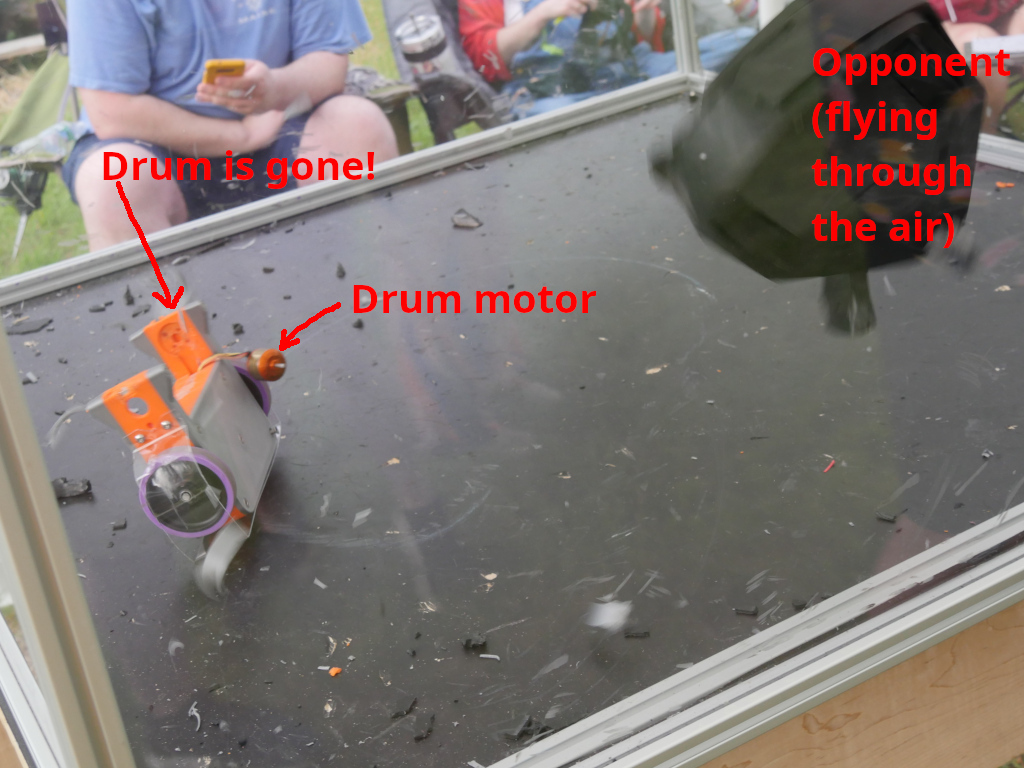
Since both robots were largely destroyed, we ended up taking about half an hour to allow rebuilds for a rematch (this had been Drumnado’s first loss on a double elimination bracket, and so we needed to rematch the exact same robots to decide who would be in first place).
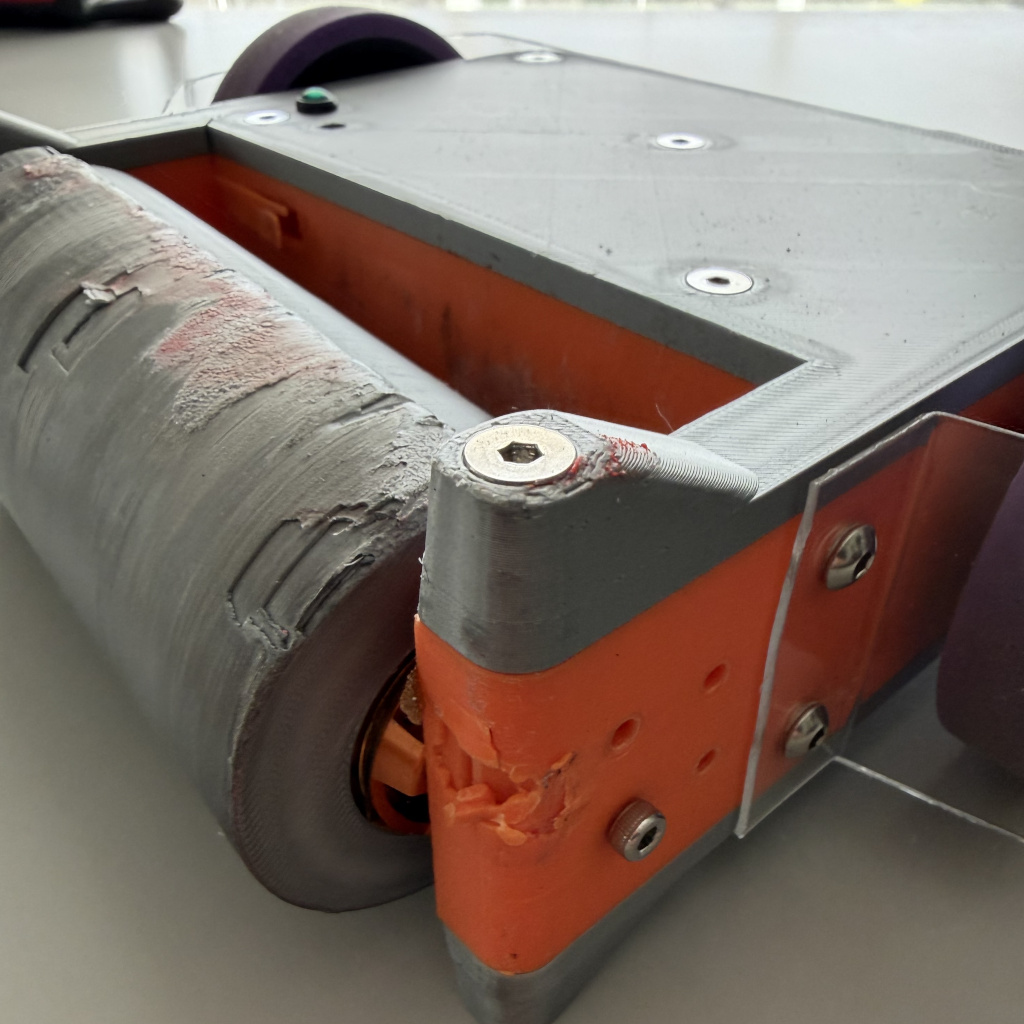
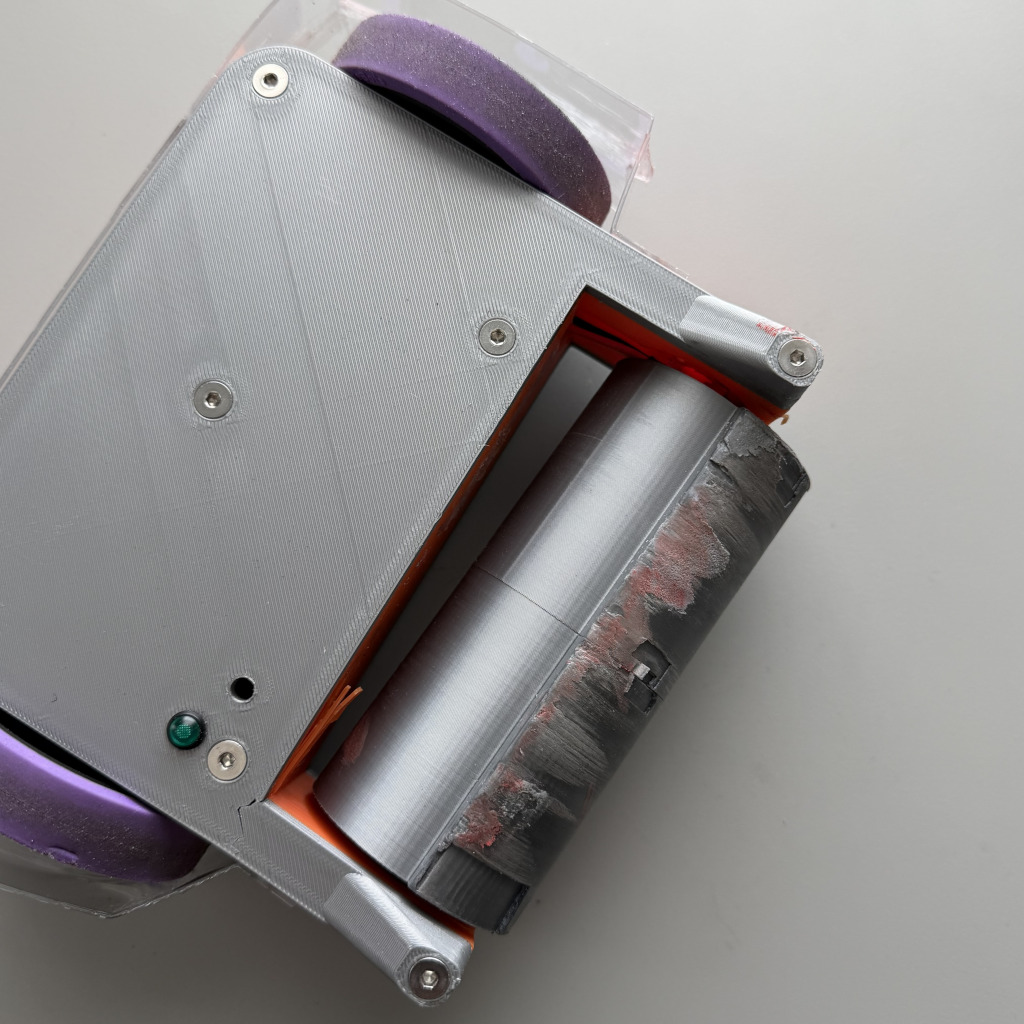
Drumnado won the final match, but was heavily damaged:
Drumnado 3.0
The parts are already coming off the printer for the next version of Drumnado, which needs to be ready a bit sooner than next June since there is going to be an event in Austin Texas in about two months time:
The stackup for the drum spinner has always been tedious to assemble - involving numerous spacers that are hard to insert between the bearing and the drum. That was especially evident during the emergency rebuild before the final match. Matches are likely to be closer spaced for the Austin event, so ease of repair is the top goal for Drumnado 3.0.
I intend to solve that issue with a completely revamped body that is split into two parts, giving easier access to the spacers. A standoff will be used to lock the two pieces together in the center:
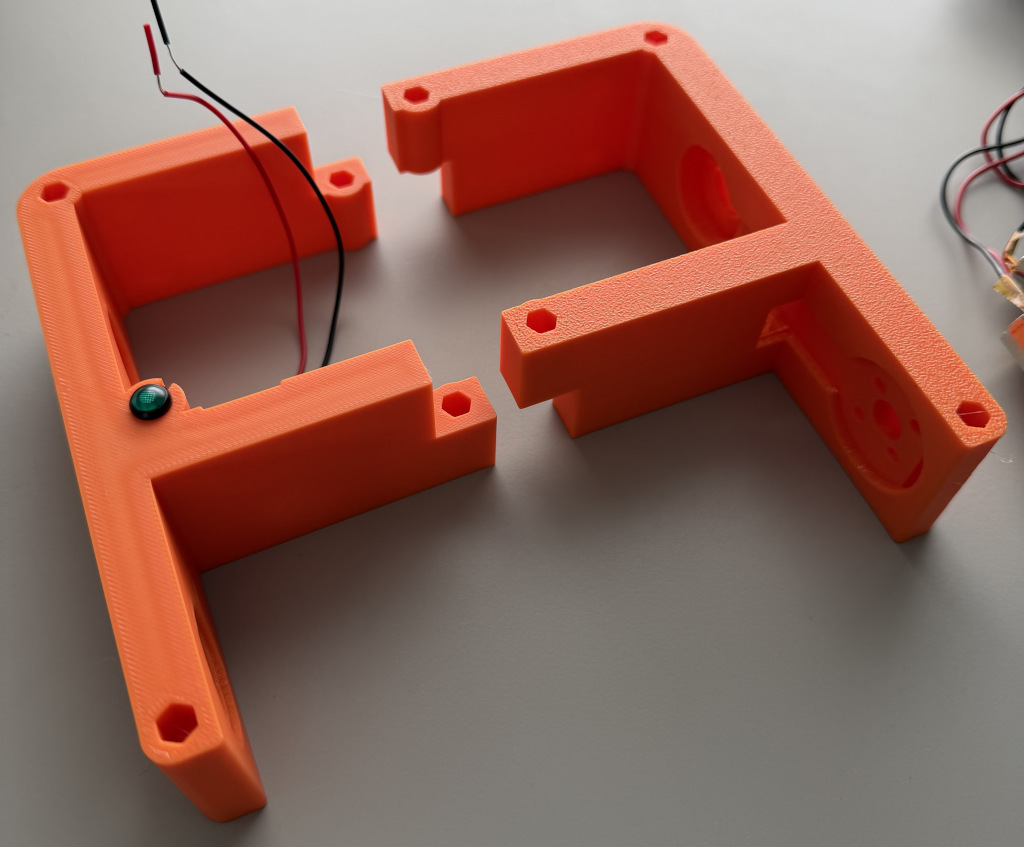
I’ll also be using some Loctite on those motor screws that kept falling out - something that wouldn’t have really been possible without the new split body design.